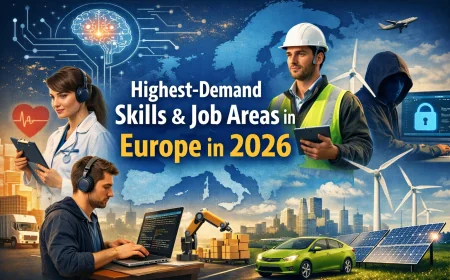
High Demand Skills in Europe for Bangladeshi Workers in 2026 | Best Jobs & Career Guide
Looking for high-demand skills to work in Europe in 2026? Discover the top careers, fastest-growing sectors, salary insights, language requirements, visa pathways, and how Bangladeshi professionals can prepare for success.
 Mahfuz Hosen

As the European job market evolves, employers across the continent are struggling to find qualified workers with specific skills. For Bangladeshi professionals willing to work abroad, Europe presents enormous opportunities — especially in sectors with critical labour shortages. In 2026, demand continues to rise for workers in technology, healthcare, engineering, green sectors, skilled trades, and more. Understanding which skills are most valued, and how to prepare for them, can dramatically increase your chances of landing a good job and a work visa in Europe.
In this guide we will explore:
-
The current landscape of Europe’s job market
-
The top 10 specific skills and professions in demand
-
Sector-by-sector breakdown
-
What Bangladeshi workers need to succeed in Europe
-
Language, education, and certification requirements
-
Visa pathways and how to prepare
-
Practical tips for job hunting
Let’s dive in.
Why Europe Needs Skilled Workers in 2026
Europe’s demographic and economic trends are creating persistent labour gaps across many industries. Populations are aging, workforces are shrinking, and technological change is accelerating demand for new skill sets. According to labour market analyses from the European Labour Authority, nearly every EU member state is experiencing staffing shortages — particularly in healthcare, engineering, IT, construction, and trades.
Additionally, the European Commission identifies 40+ professions across sectors with critical shortages, including transport, construction, and technical trades.
Meanwhile, job vacancy rates remain elevated in services and industry, showing a structural need for both highly skilled and mid-level professionals.
For workers from Bangladesh — a country with a young, increasingly educated workforce — these trends translate to real opportunities. But to succeed, you must understand which skills are most in demand and how to prepare for them.
Top 10 High-Demand Skills & Professions in Europe in 2026
Below is a detailed breakdown of the most sought-after careers and skill sets in Europe, specifically relevant for 2026.
1. Information Technology & Digital Skills
Technology remains at the top of Europe’s demand list. Across Germany, the Netherlands, Sweden, Ireland, and beyond, tech companies and digital service providers are seeking professionals with deep expertise in software and IT.
High-Demand Roles:
-
Software Developers (full-stack, backend, frontend)
-
Cybersecurity Analysts
-
Cloud Engineers (AWS, Azure, Google Cloud)
-
Data Scientists & Big Data Analysts
-
DevOps & Site Reliability Engineers
-
AI & Machine Learning Specialists
Why IT Skills Are Needed:
Digital transformation, AI integration, and cloud migration across industries — from banking to manufacturing — are driving sustained demand for tech talent.
Salary Outlook:
IT professionals in Europe often command attractive salaries, from €50,000+ annually for experienced developers to €100,000+ for senior or specialized roles.
Skill Tips for Bangladeshis:
Gain strong programming foundations, pursue globally recognized certificates (e.g., AWS, CISSP, Google), and build portfolios on platforms like GitHub.
2. Healthcare & Allied Health Professionals
Europe’s aging population has increased demand for healthcare workers. Countries like Ireland, Germany, and the Netherlands are issuing large numbers of work permits in healthcare, particularly for nursing roles.
Most Needed Roles:
-
Nurses (general, geriatric, ICU)
-
Physiotherapists & Occupational Therapists
-
Medical Technologists
-
Radiographers
-
Healthcare Assistants
Despite being long-standing shortages, a European labour report confirms that nursing and allied healthcare remain high-demand occupations.
Language Requirements:
Many healthcare roles require local language proficiency (often B2 or higher), especially for patient-facing positions.
3. Engineering & Technical Trades
Engineering continues to drive Europe’s industrial competitiveness. Demand spans multiple fields from construction and mechanical systems to renewable energy and automation.
Most In-Demand Skills:
-
Mechanical, Electrical & Civil Engineers
-
Mechatronics & Automation Technicians
-
Battery & EV Engineers
-
Industrial IoT Specialists
-
Manufacturing and Robotics Programmers
Europe’s manufacturing and construction sectors struggle to fill technical roles, a trend expected to continue through 2026.
Why This Matters:
Industrial automation, smart factories, and green infrastructure projects are expanding rapidly — they require skilled engineers.
4. Construction & Skilled Trades
“Blue-collar” trades are no longer overlooked — many countries list tradespeople among urgently needed workers. Skilled labour shortages in roles like welding, plumbing, and electrical work are widespread.
High-Demand Trades:
-
Welders & Metalworkers
-
Electricians
-
Plumbers & Pipefitters
-
Carpenters
-
Heavy Truck Drivers
-
Machine Operators
Why You Should Consider Technical Training:
Vocational training and apprenticeships are often pathways to stable employment and faster work permit approvals.
5. Renewable Energy & Green Economy Jobs
Europe’s commitment to net-zero emissions by 2050 is creating a boom in green jobs across renewable energy, sustainability consulting, and environmental tech.
In-Demand Skills:
-
Solar & Wind Energy Technicians
-
Environmental Auditors
-
Sustainable Supply Chain Managers
-
ESG Specialists
-
Carbon Accounting Analysts
Even if your background is not engineering, green sector roles value sustainability knowledge and project experience.
6. Logistics, Supply Chain & Transport
Global supply chain challenges and rising e-commerce have pushed logistics skills into high demand. Europe continues to need drivers, logistics coordinators, and supply chain planners.
Hot Roles:
-
Heavy Truck & Lorry Drivers
-
Warehouse & Distribution Specialists
-
Supply Chain Analysts
-
Fleet Coordinators
Training programs in logistics and commercial driving licenses can lead to rapid employment.
7. Digital Marketing, UX/UI & Creative Tech
Demand for digital presence is boosting job openings in creative and marketing fields. Employers want professionals who understand digital audiences, branding, and engagement strategies.
Growing Roles:
-
Digital Marketing Specialists
-
Social Media Strategists
-
UX/UI Designers
-
E-commerce Managers
-
Content Creators
For Bangladeshis with strong language skills and creativity, this sector offers entry opportunities, especially in international firms.
8. Financial & Fintech Skills
Europe’s financial services sector — including fintech — is expanding. Jobs today increasingly combine finance with technology and compliance roles.
Key Opportunities:
-
Fintech Developers
-
Blockchain Analysts
-
Risk & Compliance Officers
-
Digital Payment Systems Experts
-
Financial Data Analysts
Financial certifications like CFA, FRM, or Fintech diplomas add value.
9. Language, Teaching & Cultural Exchange Roles
Language skills — especially multilingual professionals — remain valuable in service, education, and support functions. English is widely used, and knowing German, French, or Dutch is a bonus.
Notable Roles:
-
English Language Teachers
-
Cultural Liaisons
-
Translator/Interpreter
Education roles are especially in demand in international schools and language centers.
10. Soft Skills & Future-Ready Competencies
In addition to vocational and technical skills, employers across Europe value transferable “soft skills” such as analytical thinking, problem-solving, leadership, resilience, and teamwork.
Top Soft Skills Sought:
-
Analytical & Critical Thinking
-
Adaptability & Resilience
-
Communication Skills
-
Leadership & Team Collaboration
-
Lifelong Learning
These skills help professionals navigate cross-cultural workplaces and adapt to rapid technological change.
Skills Roadmap for Bangladeshi Workers in 2026
If you are planning to launch a career in Europe, here’s a practical roadmap:
1. Choose Your Target Sector
Decide based on your background:
-
IT/Tech?
-
Healthcare?
-
Engineering or Trades?
-
Logistics?
-
Green jobs?
Research specific nations too — Germany, Ireland, and the Netherlands have strong labour demand in specific sectors.
2. Gain Relevant Qualifications
-
Technical degrees (IT, engineering, healthcare)
-
Vocational training (trades, logistics)
-
Certifications (cloud computing, cybersecurity, language proficiency)
3. Develop Language Skills
Language matters. While English helps, knowledge of local languages (German, French, Dutch, Swedish) improves employability.
4. Build Practical Experience
Internships, freelance projects, apprenticeships, and real-world portfolios make you more competitive.
5. Understand European Standards
Many professions (especially healthcare and engineering) require foreign qualification recognition and certification conversion — plan ahead to meet these requirements.
Visa Pathways & Work Authorization
To work in Europe, Bangladeshi professionals may pursue several routes:
Work Visas & Skilled Worker Permits
-
EU Blue Card — for highly skilled professionals
-
Country-specific skilled worker visas (e.g., Germany’s Opportunity Card)
-
Seasonal and sector-specific schemes
Eligibility often depends on education, salary threshold, and job contract.
Recognition of Qualifications
Especially in healthcare and engineering, formal recognition of your academic credentials is necessary.
Language Requirements
Check each country’s rules; some require formal language test results.
Challenges for International Workers
Though opportunities are real, migrants may face hurdles:
-
Qualification recognition delays
-
Language barriers
-
Visa documentation complexity
But with planning and the right skills, these are manageable.
Conclusion: Best Strategies for Bangladeshis in 2026
Europe’s job market in 2026 is shaped by technological change, demographic shifts, and economic transitions. For Bangladeshi workers, skilled roles in IT, healthcare, engineering, renewable energy, logistics, and digital sectors offer the strongest opportunities. Combine technical expertise with strong communication and adaptability skills — and you’ll position yourself for success in one of the world’s most dynamic employment landscapes.