Are All KFC Restaurants Halal? Country-by-Country Truth Explained
Are all KFC restaurants becoming halal? Discover the real truth behind KFC’s halal policy, country-wise differences, certification issues, Muslim consumer concerns, and future trends in this detailed global guide.
 Mahfuz Hosen
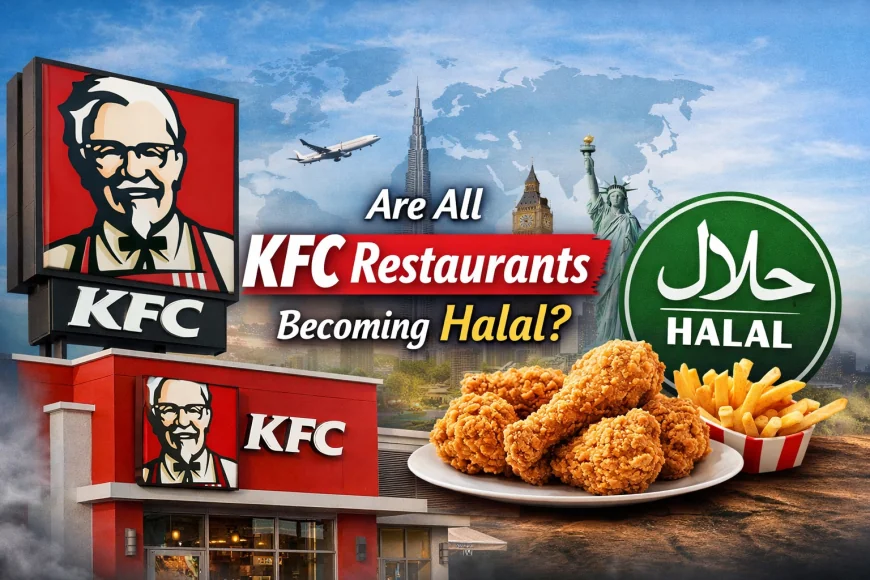
Few fast-food brands spark as much debate in Muslim communities as KFC. Whether you’re a practicing Muslim, a halal-conscious traveler, or simply curious, the question keeps coming up:
“Are all KFC restaurants becoming halal?”
Social media posts claim “KFC is now halal everywhere”, while others warn “KFC is not halal at all”. The truth, as usual, sits somewhere in between—and it’s more complex than a yes or no answer.
With over 25,000 outlets in more than 145 countries, KFC operates under local franchises, not a single global food policy. This means halal compliance can vary dramatically from one country—or even one city—to another.
This guide breaks it all down:
-
KFC’s official stance on halal food
-
Country-by-country realities
-
Certification, slaughter methods, and cross-contamination concerns
-
Why confusion exists
-
What Muslim consumers should do before eating at KFC
Let’s unpack the full picture.
Understanding Halal: More Than Just Chicken
Before judging KFC—or any fast-food chain—it’s important to understand what halal actually means.
What Makes Food Halal?
For meat to be halal, it must meet all of the following conditions:
-
Permissible animal (e.g., chicken, beef—not pork)
-
Slaughtered according to Islamic law (Dhabiha)
-
Name of Allah (Bismillah) invoked during slaughter
-
Blood fully drained
-
No cross-contamination with haram items
-
No alcohol-based ingredients in marinades, coatings, or sauces
Failing any one of these makes the food haram or doubtful (mashbooh) for many Muslims.
KFC as a Global Brand: One Name, Many Policies
Here’s the first big misconception:
KFC does NOT have a single global halal policy.
KFC is owned by Yum! Brands, but almost all restaurants are run by local franchise operators. Each franchise:
-
Sources chicken locally
-
Follows local food laws
-
Responds to local customer demand
This decentralization is why KFC can be fully halal in one country and completely non-halal in another.
Countries Where KFC Is Fully Halal
In many Muslim-majority countries, KFC outlets are 100% halal-certified, often monitored by government or nationally recognized halal authorities.
1. Saudi Arabia 🇸🇦
-
Fully halal
-
Strict government oversight
-
Slaughter complies with Islamic law
-
No pork or alcohol in any form
2. Bangladesh 🇧🇩
-
All KFC outlets serve halal chicken
-
Certified by local Islamic authorities
-
No pork products in the supply chain
3. Malaysia 🇲🇾
-
Certified by JAKIM (one of the world’s strictest halal bodies)
-
Entire supply chain audited
-
Zero tolerance for cross-contamination
4. Indonesia 🇮🇩
-
Halal certification by MUI
-
Mandatory halal labeling laws
-
KFC Indonesia is one of the largest halal fast-food operations globally
5. Pakistan 🇵🇰
-
Halal meat standard nationwide
-
KFC openly markets itself as halal
6. Middle Eastern Countries (UAE, Qatar, Kuwait, Oman)
-
Halal by default
-
Government-regulated slaughterhouses
-
No pork in kitchens
✅ In these regions, Muslims can eat at KFC with confidence.
Countries Where KFC Is Partially Halal
This is where confusion starts.
United Kingdom 🇬🇧
-
Some KFC outlets are halal
-
Others are not
-
Some cities have mixed policies
Important facts:
-
Halal KFC stores usually do not serve pork
-
They display halal certification clearly
-
Not all UK halal KFCs use hand slaughter (this matters to some Muslims)
KFC UK officially states:
“Some of our restaurants serve halal chicken, depending on location.”
South Africa 🇿🇦
-
Many halal-certified branches
-
Certified by bodies like SANHA or Halaal Foundation
-
But not all outlets are halal
Canada 🇨🇦
-
Limited halal outlets
-
Mostly in Muslim-dense neighborhoods
-
Certification varies by province
⚠️ Always check the specific restaurant—not just the country.
Countries Where KFC Is NOT Halal
In many non-Muslim-majority countries, KFC does not serve halal meat at all.
United States 🇺🇸
-
Generally not halal
-
Standard industrial slaughter methods
-
Pork items present in kitchens
-
High risk of cross-contamination
Australia 🇦🇺
-
Mostly non-halal
-
Some suppliers claim “halal-suitable,” but not certified
-
No consistent nationwide halal policy
France 🇫🇷
-
Mixed claims online
-
Majority of outlets are not certified halal
-
Stunning (pre-slaughter) is common, which some scholars reject
Germany 🇩🇪
-
Not halal
-
Pork items common
-
No halal certification
Why Isn’t KFC Halal Everywhere?
If halal demand is growing globally, why hasn’t KFC just “gone halal” worldwide?
1. Cost and Supply Chain Complexity
-
Halal slaughter requires certified facilities
-
Separate logistics to avoid contamination
-
Higher costs in non-Muslim markets
2. Legal and Cultural Barriers
-
Some countries regulate religious slaughter tightly
-
Animal welfare laws may conflict with halal methods
3. Market Demand
-
In Muslim-minority countries, halal demand may not justify full conversion
-
KFC prioritizes majority consumer preferences
4. Menu Conflicts
-
Bacon, ham, alcohol-based flavorings
-
Removing these could impact sales in Western markets
The Halal Certification Controversy
Not all halal certifications are equal—and this fuels debate.
Key Points of Disagreement:
-
Mechanical vs hand slaughter
-
Pre-stunning of animals
-
Certification authority credibility
-
Cross-contamination risk
Some Muslims accept machine slaughter with Bismillah recitation; others reject it completely.
This explains why:
One Muslim says “KFC is halal,”
Another says “KFC is haram,”
And both believe they are correct.
Social Media Myths: Is KFC “Quietly Going Halal”?
You may have seen posts claiming:
-
“KFC is switching to halal worldwide”
-
“KFC secretly removed pork”
-
“All KFC chicken is now halal”
❌ There is no official global announcement confirming this.
What is happening:
-
Expansion of halal outlets in high-Muslim areas
-
More transparency in labeling
-
Market-driven halal adoption—not ideological change
How Muslims Can Check If a KFC Is Halal
Before eating, do at least one of the following:
-
Look for halal certification logos
-
Ask staff directly about halal sourcing
-
Check the official KFC country website
-
Look for pork-free menu confirmation
-
Consult local halal authority listings
If unsure, the safest approach in Islam is:
“When in doubt, leave it out.”
The Future: Will More KFCs Become Halal?
The trend is clear:
📈 Global halal food market is expected to exceed USD 3 trillion by 2030.
KFC and other fast-food giants are responding by:
-
Expanding halal offerings
-
Creating Muslim-friendly branches
-
Offering location-specific compliance
However:
-
A fully halal global KFC is unlikely soon
-
Market economics—not religious ideology—drive decisions
Final Verdict: Are All KFC Restaurants Becoming Halal?
Short Answer:
❌ No.
Long Answer:
-
Some countries: 100% halal
-
Some countries: Partially halal
-
Many countries: Not halal at all
KFC is becoming more halal-inclusive, not universally halal.
Country-Wise Halal Status of KFC (Updated Global Overview)
Note: Halal status depends on local franchise policies and certification authorities. Always verify at the specific outlet.
🟢 Fully Halal Countries (All or Almost All Outlets Halal)
| Country | Halal Status | Certification / Notes |
|---|---|---|
| 🇸🇦 Saudi Arabia | ✅ Fully Halal | Government-regulated Islamic slaughter |
| 🇧🇩 Bangladesh | ✅ Fully Halal | Local Islamic authorities certify |
| 🇵🇰 Pakistan | ✅ Fully Halal | Halal nationwide, no pork served |
| 🇲🇾 Malaysia | ✅ Fully Halal | JAKIM certified (strictest globally) |
| 🇮🇩 Indonesia | ✅ Fully Halal | MUI certification mandatory |
| 🇦🇪 UAE | ✅ Fully Halal | Government-approved halal supply |
| 🇶🇦 Qatar | ✅ Fully Halal | State-regulated halal meat |
| 🇰🇼 Kuwait | ✅ Fully Halal | Islamic slaughter only |
| 🇴🇲 Oman | ✅ Fully Halal | Halal by default |
| 🇪🇬 Egypt | ✅ Fully Halal | Local halal authorities |
| 🇲🇦 Morocco | ✅ Fully Halal | Islamic slaughter practices |
| 🇯🇴 Jordan | ✅ Fully Halal | Government oversight |
| 🇧🇭 Bahrain | ✅ Fully Halal | Halal certified |
| 🇹🇷 Turkey | ✅ Fully Halal | Halal meat standard |
🟡 Partially Halal Countries (Some Outlets Halal)
| Country | Halal Status | Important Notes |
|---|---|---|
| 🇬🇧 United Kingdom | ⚠️ Partial | Some branches halal, some not |
| 🇨🇦 Canada | ⚠️ Limited | Few halal locations in Muslim areas |
| 🇿🇦 South Africa | ⚠️ Partial | Certified by SANHA/Halaal Foundation |
| 🇸🇬 Singapore | ⚠️ Partial | Selected outlets halal-certified |
| 🇹🇭 Thailand | ⚠️ Partial | Mainly tourist & Muslim regions |
| 🇫🇯 Fiji | ⚠️ Partial | Limited halal outlets |
| 🇳🇿 New Zealand | ⚠️ Partial | Some halal suppliers, not universal |
🔴 Non-Halal or Mostly Non-Halal Countries
| Country | Halal Status | Reason |
|---|---|---|
| 🇺🇸 United States | ❌ Not Halal | No certification, pork present |
| 🇦🇺 Australia | ❌ Mostly Non-Halal | Not certified, mixed suppliers |
| 🇫🇷 France | ❌ Mostly Non-Halal | Stunning + pork in kitchens |
| 🇩🇪 Germany | ❌ Not Halal | No halal certification |
| 🇳🇱 Netherlands | ❌ Not Halal | Pork cross-contamination |
| 🇯🇵 Japan | ❌ Not Halal | Standard non-halal slaughter |
| 🇰🇷 South Korea | ❌ Not Halal | No halal compliance |
| 🇨🇳 China | ❌ Not Halal | Non-halal supply chain |
| 🇧🇷 Brazil | ❌ Not Halal | Export halal ≠ local KFC halal |
| 🇮🇹 Italy | ❌ Not Halal | No halal certification |
🟠 “Halal-Suitable” or Unclear Status Countries
| Country | Status | Explanation |
|---|---|---|
| 🇪🇸 Spain | ❓ Unclear | No official halal claim |
| 🇷🇺 Russia | ❓ Mixed | Regional differences |
| 🇵🇭 Philippines | ❓ Limited | No clear certification |
| 🇻🇳 Vietnam | ❓ Unclear | Not marketed as halal |
| 🇲🇽 Mexico | ❓ Unclear | No halal transparency |
Key Takeaways for Muslim Consumers
✔ Muslim-majority countries: Generally safe
⚠️ Western countries: Must check store-by-store
❌ USA & Europe: Mostly non-halal
❓ When in doubt: Avoid or verify locally
Islamic principle reminder:
“Doubtful matters should be avoided.”
Conclusion
The question “Are all KFC restaurants becoming halal?” reflects a broader global shift toward ethical, religiously compliant food—but the reality remains fragmented.
For Muslim consumers, awareness is key:
-
Know your local policies
-
Verify certification
-
Respect differing scholarly opinions
As halal demand grows, KFC will likely continue expanding halal options—but until then, the responsibility to verify remains with the consumer.