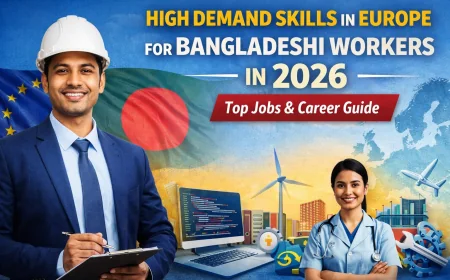
Highest Demand Skills in Europe for Bangladeshi Migrants in 2026
Discover the highest demand skills in Europe for Bangladeshi migrants in 2026. Explore in-demand jobs, essential skills, visa pathways, and career growth opportunities across top European countries.
 Mahfuz Hosen

Migration to Europe from Bangladesh has been steadily increasing in recent years, driven by the pursuit of better career opportunities, higher wages, and quality of life. However, the key to successful migration lies in aligning skills with market demand. European countries prioritize skilled migrants who can contribute to their economies and fill labor shortages in critical sectors.
In 2026, the European job market continues to evolve rapidly, influenced by technology, healthcare demands, green energy initiatives, and infrastructure development. For Bangladeshi migrants, understanding the highest demand skills is crucial for securing employment, obtaining work visas, and building a sustainable career abroad.
This guide will cover:
-
Top in-demand sectors in Europe
-
Specific skills that employers seek
-
Countries with the highest opportunities
-
Visa pathways and work permits
-
Tips for upskilling and career preparation
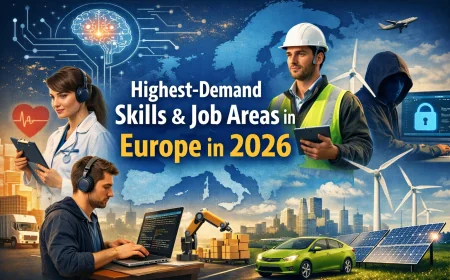
Top Sectors with High Demand for Migrants
Europe’s labor market has specific areas experiencing chronic shortages, where skilled workers from Bangladesh and other countries are highly sought after.
1. Information Technology (IT) and Software Development
Why in demand:
-
Rapid digital transformation in Europe
-
Growth of AI, cybersecurity, cloud computing, and fintech
-
Need for developers, engineers, and IT project managers
In-Demand IT Skills:
-
Programming languages: Java, Python, JavaScript, C#, PHP
-
Web development and mobile app development
-
Cloud computing: AWS, Azure, Google Cloud
-
Cybersecurity expertise
-
Data analytics, AI, and machine learning
Top Countries for IT Migrants:
-
Germany
-
Netherlands
-
Ireland
-
Sweden
Tips:
-
Certifications such as AWS Certified Solutions Architect or Cisco CCNA increase employability.
-
Knowledge of European software standards and frameworks is advantageous.
2. Healthcare and Nursing
Europe’s aging population is driving high demand for healthcare professionals. Bangladeshis with medical and nursing skills are in strong demand.
In-Demand Roles:
-
Registered nurses and caregivers
-
General practitioners and physicians
-
Physiotherapists
-
Laboratory technicians
Skills & Requirements:
-
Professional nursing or medical degrees
-
Language proficiency (English, German, French depending on the country)
-
Experience in elderly care or specialized medical fields
Top Countries:
-
Germany (especially for nurses)
-
Sweden
-
Norway
-
Netherlands
Opportunities:
-
Many countries offer fast-track work visas for healthcare professionals.
-
Hospitals and eldercare facilities provide relocation assistance for skilled workers.
3. Engineering and Technical Professions
Europe faces a shortage of skilled engineers across sectors, including civil, mechanical, electrical, and chemical engineering.
High-Demand Engineering Skills:
-
Civil engineering and construction management
-
Mechanical and electrical engineering
-
Renewable energy and green technology
-
Industrial automation and robotics
Top Countries:
-
Germany (especially mechanical and civil engineering)
-
Switzerland
-
Denmark (renewable energy)
-
Austria
Tips:
-
Professional recognition of engineering qualifications is crucial (e.g., EU directives for regulated professions).
-
Knowledge of EU safety and quality standards is highly valued.
4. Skilled Trades and Vocational Skills
Europe increasingly relies on vocational skills, particularly in countries facing shortages of tradespeople.
In-Demand Trades:
-
Plumbers, electricians, carpenters
-
Welders and metal workers
-
HVAC technicians (heating, ventilation, and air conditioning)
-
Automotive mechanics and technicians
Top Countries:
-
Germany
-
Austria
-
Switzerland
-
Norway
Opportunities:
-
Vocational training or apprenticeship programs often lead to permanent employment.
-
Trades often offer fast-track residency pathways in Germany and Austria.
5. Green Energy and Sustainability
The European Green Deal and renewable energy initiatives have created new demand for skilled workers in sustainability.
In-Demand Green Skills:
-
Solar panel installation and maintenance
-
Wind turbine technicians
-
Energy efficiency consultants
-
Environmental engineers
Top Countries:
-
Germany
-
Denmark
-
Netherlands
-
Sweden
Opportunities:
-
Green energy projects are often government-subsidized.
-
Countries offer incentives for skilled migrants in renewable energy sectors.
6. Finance and Accounting
European financial centers are continuously seeking skilled accountants, auditors, and finance professionals.
In-Demand Roles:
-
Certified accountants (ACCA, CPA, CIMA)
-
Financial analysts and investment advisors
-
Tax and compliance specialists
-
Banking and fintech professionals
Top Countries:
-
United Kingdom
-
Germany
-
Switzerland
-
Ireland
Tips:
-
International accounting certifications improve job prospects.
-
Knowledge of EU tax laws and financial regulations is beneficial.
Most Promising European Countries for Bangladeshi Migrants
The demand for skills varies by country, influenced by economic priorities, demographics, and migration policies.
Germany
-
Strong demand in healthcare, IT, engineering, and skilled trades
-
Offers the Blue Card EU for highly skilled professionals
-
Vocational training pathways for trades and technical roles
Netherlands
-
Growing tech industry and logistics sector
-
English widely spoken, easing integration
-
Focus on IT, engineering, finance, and renewable energy
Sweden
-
Aging population drives demand in healthcare
-
Focus on green energy, IT, and engineering
-
Offers work permits for highly skilled professionals
Ireland
-
Booming IT and fintech sectors
-
English-speaking country simplifies adaptation
-
Opportunities in healthcare and financial services
Norway
-
High demand in healthcare, construction, and skilled trades
-
Offers fast-track permanent residence for qualified migrants
Required Skills and Qualifications for Migration
Migrants from Bangladesh must align skills with employer and government requirements for successful placement.
Language Skills
-
English proficiency is essential in the UK, Ireland, Netherlands, and Sweden
-
German is critical for Germany, Austria, and Switzerland
-
French is required for Belgium, France, and Luxembourg
Educational Qualifications
-
Bachelor’s or Master’s degrees in relevant fields (engineering, IT, healthcare)
-
Vocational certificates for trades and technical roles
-
Professional licenses recognized in the EU (e.g., nursing, accounting)
Soft Skills
-
Adaptability and cultural sensitivity
-
Communication and teamwork skills
-
Problem-solving and analytical abilities
-
Willingness to upskill and undergo professional training
How to Find High-Demand Jobs in Europe
1. Job Portals and Recruitment Agencies
-
LinkedIn, Indeed, StepStone, Glassdoor
-
Specialized recruiters for healthcare, IT, and engineering
2. Government Migration Portals
-
Germany: Make-it-in-Germany.de
-
Netherlands: Netherlands Enterprise Agency (RVO)
-
Sweden: Swedish Migration Agency
3. Networking and Professional Associations
-
Join professional associations in target sectors
-
Attend online webinars, workshops, and conferences
Visa Pathways and Work Permits for Bangladeshi Migrants
Europe offers multiple legal migration channels for skilled workers.
EU Blue Card
-
For highly skilled workers with a recognized degree
-
Minimum salary thresholds apply (varies by country)
-
Valid across most EU countries
National Work Permits
-
Germany: Skilled Worker visa for nurses, engineers, IT professionals
-
Netherlands: Highly Skilled Migrant scheme
-
Sweden: Job offer-based work permits
Other Options
-
Seasonal work permits for trades and agriculture
-
Apprenticeships and vocational training leading to permanent residence
Tips for Bangladeshi Migrants to Increase Employability
-
Upskill with Certifications
-
IT: AWS, Cisco, Microsoft, Python, Data Analytics
-
Healthcare: Nursing license recognition, specialty courses
-
Trades: European vocational certification
-
-
Learn the Local Language
-
Enhances employability and integration
-
German courses for Germany, French for Belgium/France
-
-
Gain International Experience
-
Remote freelancing or internships with European companies
-
-
Research Migration Rules
-
Understand visa requirements, tax regulations, and professional recognition
-
-
Prepare a Strong CV and LinkedIn Profile
-
Highlight skills relevant to European employers
-
Include certifications and work experience
-
Challenges and How to Overcome Them
Challenges:
-
Competition with EU and international migrants
-
Language barriers
-
High cost of living in Western Europe
-
Recognition of Bangladeshi degrees and certifications
Solutions:
-
Continuous upskilling and certifications
-
Language classes and cultural integration programs
-
Target emerging European markets with lower competition
-
Networking and connecting with diaspora communities
Conclusion: Building a Future in Europe
For Bangladeshi migrants, Europe presents unparalleled opportunities for career advancement, skill development, and financial growth. The key to success lies in matching skills with market demand, acquiring relevant certifications, and understanding migration pathways.
In 2026, the highest demand skills span IT, healthcare, engineering, trades, green energy, and finance. By strategically preparing, migrants can secure stable, well-paying employment, integrate successfully into European society, and lay the foundation for a long-term career abroad.
Investing in the right skills today ensures that Bangladeshi professionals can thrive in Europe’s competitive and dynamic job market, contributing meaningfully to their host countries while achieving personal and professional growth.