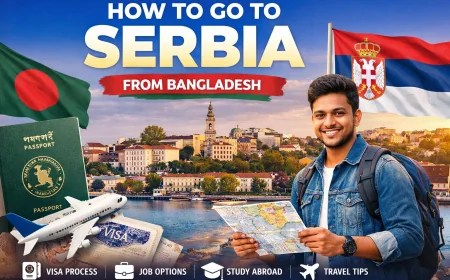
Migration to Serbia 2026: Complete Guide to Visas, Residency & Requirements
Planning your move to Serbia in 2026? This complete guide covers Serbia visa requirements, residency permits, work permits, family reunification, cost of living, and step-by-step migration process for foreigners.
 Mahfuz Hosen

Serbia has become an increasingly attractive destination for migrants, students, investors, and professionals seeking new opportunities in Europe’s dynamic Balkan region. With evolving immigration rules and new government initiatives, 2026 is shaping up to be an especially promising year for those planning a long-term move. Whether you’re thinking about working abroad, joining family members, studying, investing, or simply relocating your life to Serbia, this comprehensive guide will walk you through everything you need to know — from visas and residence permits to practical tips for settling in your new home.
Why Serbia Is a Popular Choice for Migration in 2026
Serbia’s strategic location at the crossroads of Eastern and Western Europe, its relatively low cost of living, and its welcoming immigration framework have made it a favorite among expats looking for quality of life without the bureaucratic hurdles of many Western European countries.
Here’s why Serbia is gaining attention:
-
Straightforward visa procedures for many nationalities.
-
A Unified Permit system allowing combined residence and work authorization.
-
Potential pathways to permanent residency after continuous temporary stay.
-
Options for family reunification, education, entrepreneurship, and investment-based residency.
-
Increasing job opportunities in sectors facing labor shortages.
But before you book your ticket, it’s crucial to understand the legal requirements you must fulfill — starting with visas.
1. Visa Requirements for Entering Serbia
Who Needs a Visa?
Visa requirements depend primarily on your nationality and passport type. Citizens from many countries can enter Serbia without a visa for short stays (up to 90 days within 180 days) — especially if they hold valid Schengen, EU, UK, or US residence permits or visas.
However, if you plan to stay longer, work, study, invest, or join family, you’ll likely need one of Serbia’s long-stay visas (Visa D) or residence permits.
Types of Visas
Serbia generally offers two main types of visas for migration purposes:
Visa C (Short-Stay Visa)
-
Valid for tourism, business, or transit.
-
Allows stay up to 90 days within a 180-day period.
-
It does not grant rights to work or apply for long-term residency.
Visa D (Long-Stay Visa)
-
For migrants intending to stay longer than 90 days.
-
Necessary for applying for temporary residence.
-
Required for those entering Serbia to work, study, or live long-term.
Key Visa Requirements
To apply for a Visa D, applicants usually need:
-
A completed visa application form.
-
A valid passport (issued within the last 10 years with at least two blank pages).
-
Passport-style photos.
-
Proof of purpose of stay (employment contract, admission letter for study, etc.).
-
Proof of sufficient funds and accommodation.
-
Valid travel medical insurance.
-
A letter of invitation (for private or business visas).
Visa applications are typically submitted to a Serbian embassy or consulate in your home country — but increasingly, Serbia’s e-visa and e-application portals allow online submissions.
2. Temporary Residence Permit
Once you arrive in Serbia with a long-stay visa or under a visa-free regime, you’ll likely need a temporary residence permit to stay long-term.
What Is a Temporary Residence Permit?
A temporary residence permit is a legal authorization allowing a foreign national to reside in Serbia beyond 90 days. It can also grant work rights depending on the basis.
Permits are typically valid for up to three years and can be extended based on your ongoing reasons for staying (work, study, family, investment, etc.).
Categories for Temporary Residence
You can apply for temporary residence based on several approved reasons:
-
Employment
-
Self-employment or Entrepreneurship
-
Family reunification
-
Education or study
-
Scientific research
-
Property ownership
-
Talent or specialized skills
-
Medical treatment
-
Religious service
Unified Permit — Simplifying Residence + Work
Serbia has introduced the Unified Permit system, which combines temporary residence and work authorization into a single application. This significantly simplifies the process and reduces processing times.
In many cases where employment is the reason for your stay, you’ll not need to apply separately for a work permit — the unified permit covers both.
3. Work Permits and Employment in Serbia
Getting a job in Serbia is one of the most common routes to long-term residency, but you must follow the legal procedure.
Do You Need a Work Permit?
If you enter Serbia with a Visa D for employment or apply under a work-based category, your temporary residence permit will often include the right to work.
Thanks to recent reforms, labor market testing has been removed for many work visa applications, and unified permits can be processed in as little as 15–19 days.
Steps to Get a Work Permit
-
Secure a job offer from a Serbian employer.
-
Employer files your permit application via the e-government portal or on your behalf.
-
Submit the required documentation (passport, employment contract, background documents).
-
Receive your Unified Permit granting you residence and work rights.
4. Family Reunification in Serbia
If you have close family members already in Serbia — such as a spouse or dependent — you may be eligible for family reunification residency.
Family-related residence permits allow spouses and children to stay with family in Serbia. Adults with approved temporary residence based on family reunification often enjoy work rights as well.
This is particularly beneficial for couples and families planning a long-term life in Serbia.
5. Path to Permanent Residency and Citizenship
Permanent Residence
After living in Serbia legally for three consecutive years on temporary residence or unified permits, many migrants become eligible for permanent residency — a major milestone for long-term migration plans.
Conditions generally include:
-
Continuous residence in Serbia for at least three years.
-
Valid temporary residence or unified permit during that time.
-
Proof of sufficient financial means.
-
Registered Serbian address.
-
Health insurance coverage.
Upon approval, you’ll be issued a foreigner ID card valid for five years and renewable.
Citizenship Through Naturalization
Permanent residence is often a stepping stone towards Serbian citizenship. Requirements for naturalization typically include:
-
A period of continuous legal residence.
-
Language proficiency in Serbian.
-
Integration into Serbian society.
Note: Citizenship rules are more detailed and vary by individual situation, so consulting official sources or an immigration lawyer is recommended.
6. Practical Tips for Moving and Settling in Serbia
Cost of Living
Serbia offers a relatively lower cost of living compared to Western Europe — a major draw for migrants. Monthly expenses (rent, utilities, food, transport) vary by city, with Belgrade and Novi Sad typically more expensive than smaller towns.
Finding Accommodation
Many expats start with rentals or shared apartments. Most landlords require:
-
Proof of income or residency application
-
Security deposit
-
Signed rental contract
Make sure the contract allows you to register your Serbian address (required for residence permits).
Healthcare and Insurance
Health insurance is mandatory for obtaining visas and residence permits. You can either get private insurance valid in Serbia or later enroll in the national healthcare system once you become a resident.
Language and Culture
While many Serbians speak English, especially in urban areas, learning basic Serbian can significantly ease your daily life, help with administration, and improve work prospects.
Is Serbia the Right Choice for Your 2026 Migration?
Serbia presents a compelling case as a destination for migration in 2026, thanks to:
✔ Simplified visa and permit systems
✔ Unified residence + work permits
✔ Clear pathway to permanent residency
✔ Reasonable cost of living
✔ Diverse opportunities for professionals, families, and students
Whether you’re planning to work, reunite with family, study abroad, or simply explore a new chapter of life abroad, Serbia’s current immigration framework offers tools and options to help you succeed.
Before you begin your migration journey:
📍 Always check the latest visa and migration requirements from official Serbian government resources or embassies, as regulations continue to evolve.
📍 Consider consulting with immigration professionals to navigate complex cases.
📍 Prepare your documents carefully, ahead of time, to ensure a smooth application process.